Why Recommendation Systems?
Recommendation systems are all around us, but most of us don't even notice them! They are one of the most prevalent and impactful applications of machine learning.
How many recommenders have you interacted with today?
Check off every recommendation system you have already encountered today.
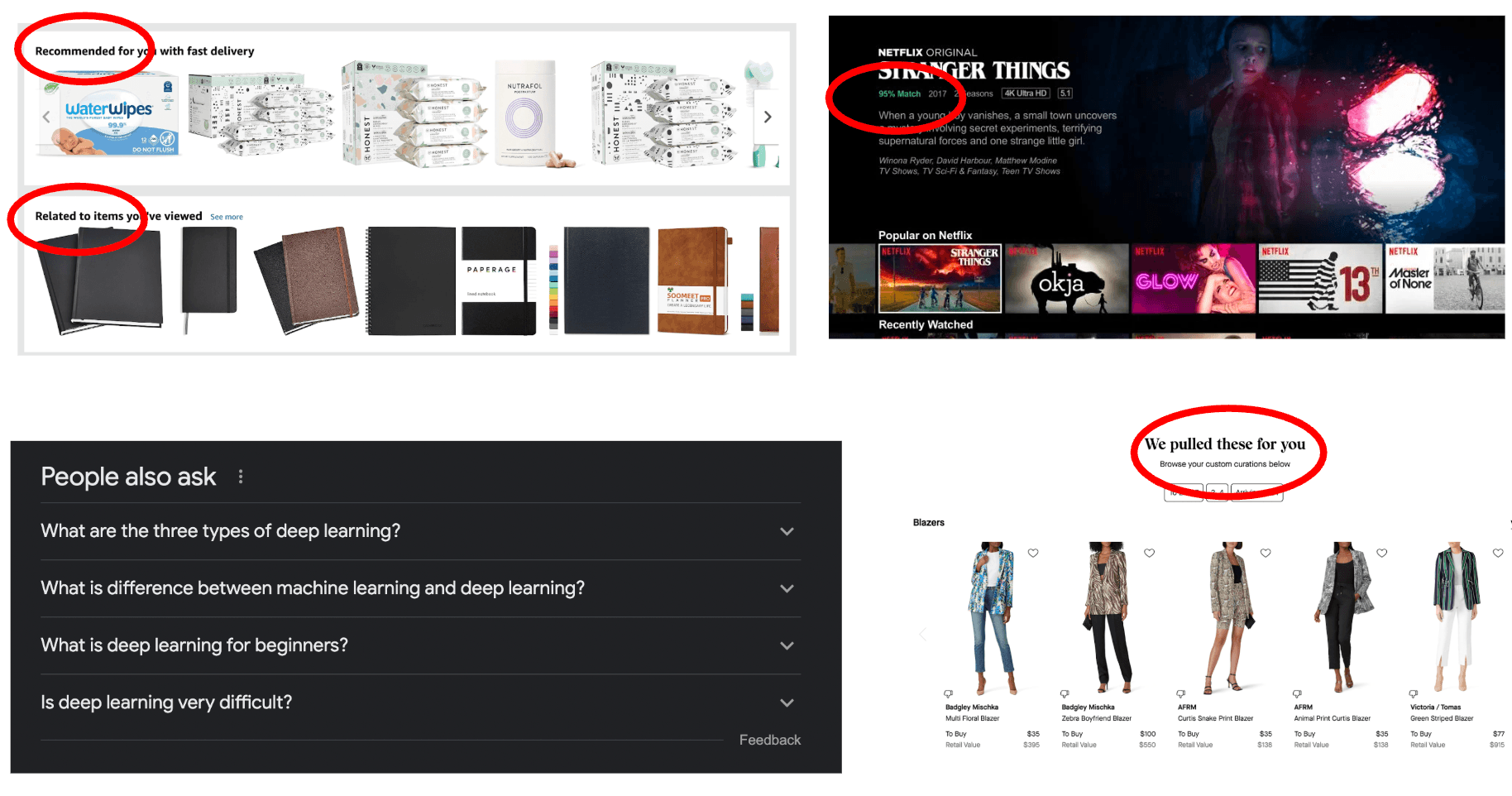
At their core, recommendation systems are personalized information filters. As the catalogue of digital goods (movies, songs, products, articles) has grown to millions or billions of items, the problem of helping a single user navigate that space has become one of the most economically significant problems in machine learning.
There are three primary motivations for deploying a recommender:
- Improving customer experience: Finding the right content reduces cognitive overload, increases satisfaction, and reduces churn. A user who consistently finds things they love is far less likely to cancel a subscription.
- Driving engagement: Time-on-site and session depth are strongly correlated with well-timed recommendations. Streaming platforms, social media, and news aggregators all treat recommendation quality as a core engagement driver.
- Driving sales: Amazon has attributed a significant fraction of its revenue to "customers also bought" recommendations. Recommenders unlock long-tail demand by exposing users to products they would never have discovered by browsing.
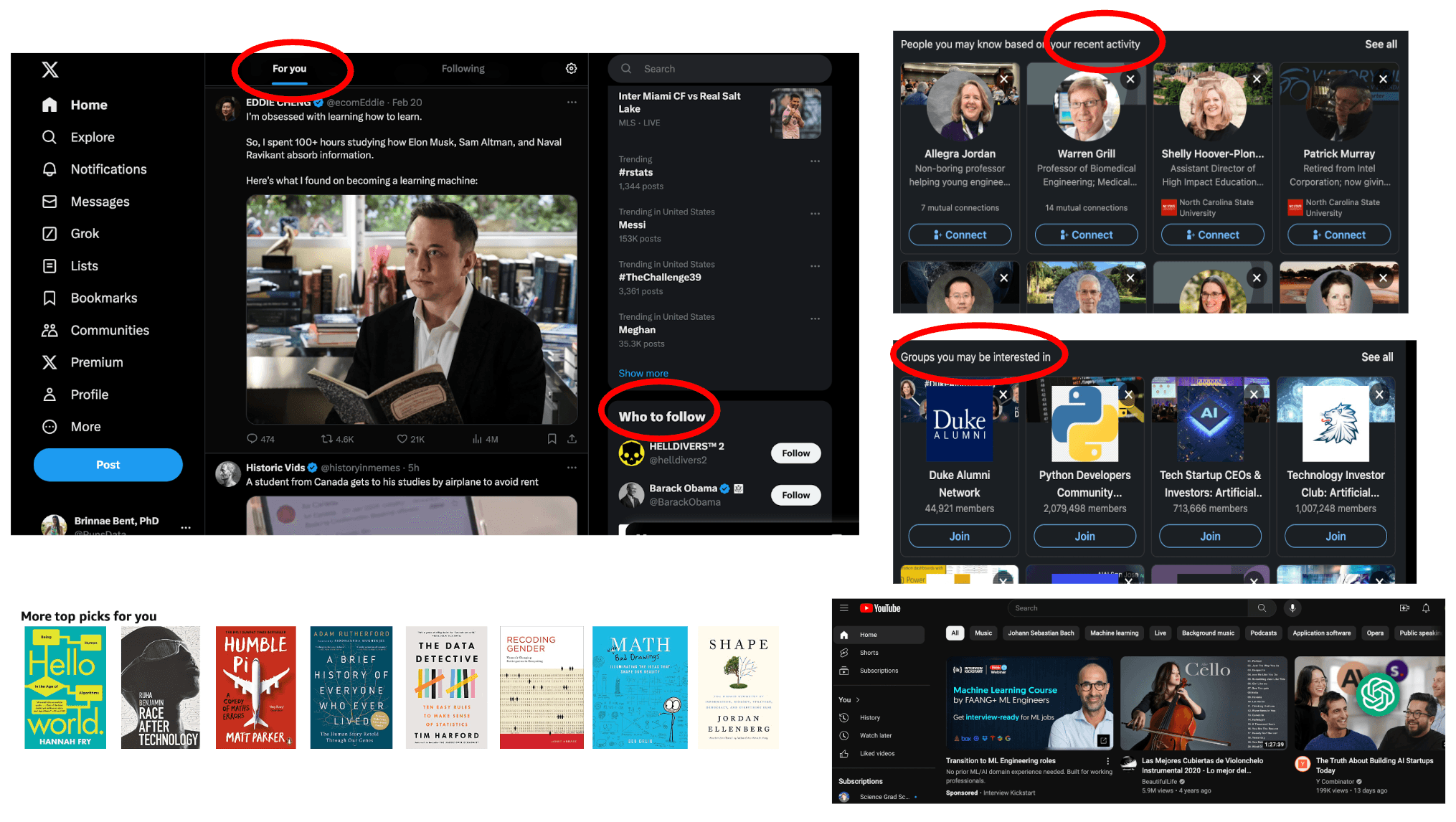
Real-World Scale
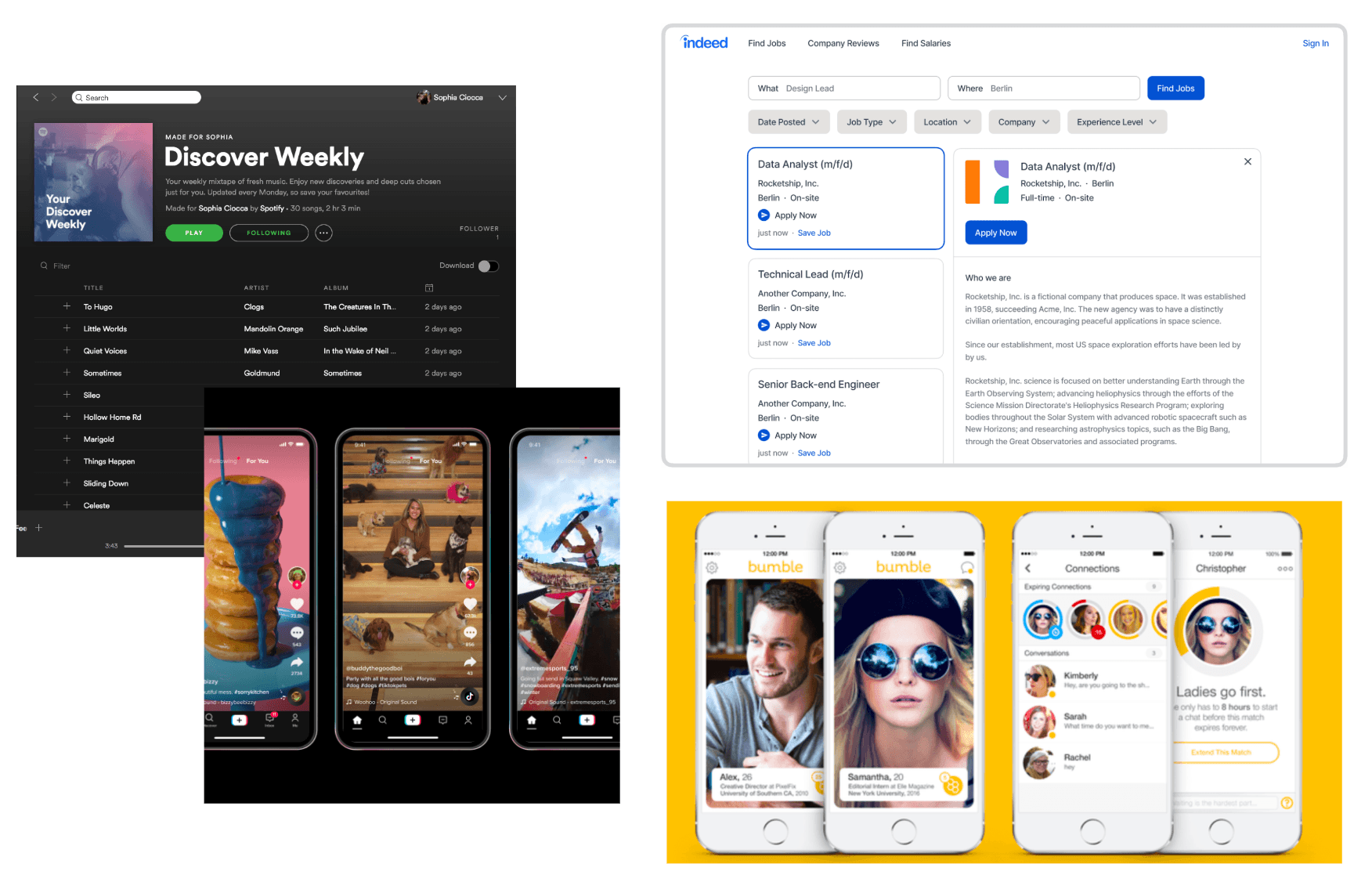
Netflix serves over 200 million subscribers and reports that more than 80% of content watched is discovered through their recommendation system. Spotify's Discover Weekly generates over 2.3 billion recommendations every week. At these scales, even a 1% improvement in recommendation relevance translates to hundreds of millions of dollars in retained value.
The Core Challenges
Recommenders face four recurring challenges that distinguish them from standard supervised learning problems:
- Scalability: A system with 100 million users and 10 million items has a user–item interaction space of 1015 entries. Most algorithms that work on toy datasets break down at production scale. Efficient data structures, approximate nearest neighbors, and two-stage retrieval pipelines become essential.
- Cold Start: What do you recommend to a brand new user who has no history? How do you recommend a brand new item no one has rated yet? These are the "cold start" problems and they require graceful fallbacks like popularity-based recommendations, content features, or onboarding questionnaires.
- Data Sparsity and Imbalance: A typical user interacts with only a tiny fraction of available items. The resulting user–item matrix can be 99.9% empty. A handful of popular items account for the vast majority of interactions; most items are long-tail with very few signals.
- Evaluation: Unlike regression problems where we minimize a numeric loss, it's genuinely hard to define what "good" recommendations means. Offline metrics (precision, recall, NDCG) are cheap to compute but may not correlate with user satisfaction. Online metrics require A/B testing at scale.
A music streaming service notices that newly released songs rarely appear in recommendations, even when users who heard them loved them. Which core recommendation challenge best describes this problem?